Wu Dawang destroys the Mao statue to stop Liu Lian calling Security
Serve the People!Wu Dawang destroys the Mao statue to stop Liu Lian calling Security when a plaster figure of Mao Zedong falls from her wardrobe and Liu reaches for the telephone. What begins as an accident becomes a confrontation over whether the damage will be reported: Wu deliberately crushes the fragments, while Liu’s later admission that she arranged the mishap reveals that the political emergency was also a test within their affair.
The accident and the threat of exposure
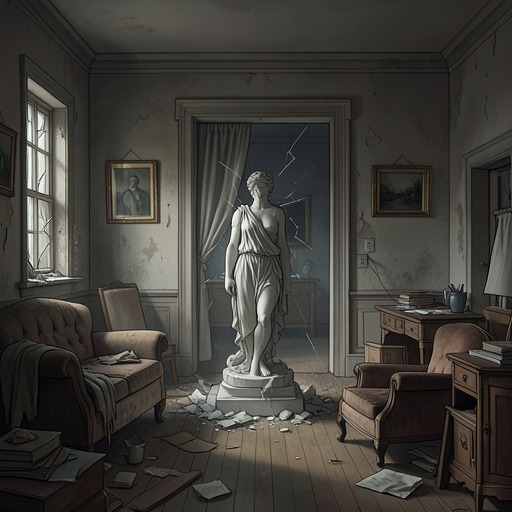
The incident takes place when Wu climbs down from the bed to get dressed and opens Liu’s wardrobe. His uniform brings a plaster statue of Mao Zedong down with it; the figure hits the floor and breaks into shards. Its severed head rolls toward the table, while its nose comes to rest in the middle of the room. Wu stands motionless, stunned by what has happened.
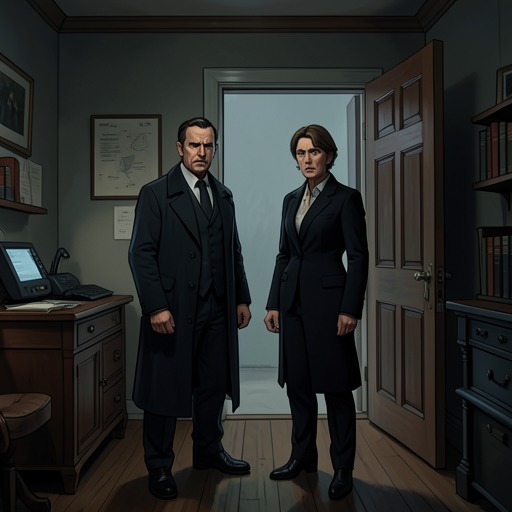
Liu bolts to the telephone and asks whether the Head of Security is still in barracks. The call transforms broken plaster into a possible report to the authorities. Wu immediately recognizes the danger and moves to take the telephone from her, insisting that she stop. Liu struggles to get the receiver back, turning the accidental damage into a contest over who will control what happens next.
Destruction as intervention
Wu positions himself between Liu and the table, batting away her attempts to reach the telephone. When she continues, he carries her away from it and puts her on the bed. He then turns to the statue’s remains and deliberately tramples them, grinding the pieces down rather than leaving the broken figure intact. His stated purpose is to prevent Liu from calling Security; the destruction is thus not merely the continuation of an accident but a calculated effort to remove the evidence that could make it consequential.
The scene reverses the statue’s significance. At first, the shattered figure represents an alarming breach with possible political consequences. Once Wu stamps the fragments into dust, he makes the damage more complete while trying to prevent it from being reported. The act exposes how closely their private actions are bound to public authority: a domestic mishap can become a matter for Security, and the couple’s immediate choices are shaped by that prospect.
Liu’s disclosure and the relationship’s performance
After the confrontation, Wu notices that Liu is calm rather than visibly shaken. The tension shifts when she tells him that she had placed the statue under his clothes, knowing that he would knock it down while trying to dress. What appeared to be an accidental political catastrophe was deliberately arranged by Liu. Her disclosure reinterprets the event as a test staged inside their private relationship, though the danger Wu feared was not imaginary once she reached for the telephone.
Wu responds to the revelation by acknowledging that his earlier anger was not meant as an attack on her. The episode therefore moves from alarm and conflict to recognition of Liu’s design, without erasing the force of the confrontation. Her setup had provoked an unpredictable response; his destruction of the statue and attempt to control the telephone call had become part of the encounter she initiated.
The statue episode belongs to a broader pattern in which Wu’s domestic role, political symbols, and affair with Liu overlap. The couple’s relationship had been made possible in part by the orderly’s official presence in the Division Commander’s household, while the relationship itself was concealed beneath ordinary household routines. Here, that concealment is briefly threatened by an object associated with Mao Zedong and the possibility of a Security report. The crisis makes visible the unstable boundary between the household’s private life and the military-political order around it.
Earlier obligations and later separation
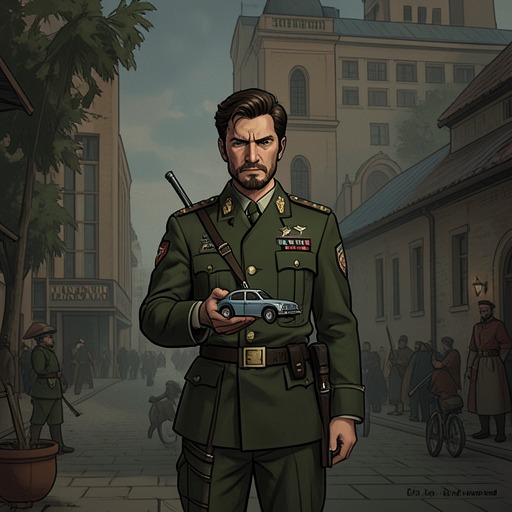
Wu’s alarm also lands against the history of obligations that have shaped his choices. Before marrying Zhao Ezi, he promised in writing to earn commendations, join the Party, and become an official, with the aim of moving her to a city. After years in which he failed to secure the expected advancement, his transfer to the Catering Squad as Deputy Sergeant changed his prospects: he later became a full Sergeant, joined the Party, and received commendations. His service in the Division Commander’s household further raised his hopes of promotion, even as his relationship with Liu disrupted his previously controlled life.
The affair’s secrecy depended on institutional circumstances as well as personal discretion. Liu had told Wu’s superiors that she needed him to remain in the house while the Division Commander was away, and they agreed, treating any failure by Wu as a reflection on the company. This arrangement helped establish the outward appearance of a legitimate household duty beneath which the affair could continue. The broken statue scene brings that arrangement’s risk into the room: if Liu’s call had gone through, their private conduct could have come under official scrutiny.
Later, the Division Commander volunteers his unit for a pilot scheme to streamline and restructure the army, with the practical consequence that the division will be disbanded. Promotions are cancelled, but an exception is arranged for Wu: he is to receive a city job and housing arrangements for his family. At the same time, the Political Instructor tells him not to return to his former post or visit the household except when urgently necessary, citing instability and the Division Commander’s uncertain temper. Wu feels relieved that his affair has not been discovered, but the separation and his departure bring the relationship toward an abrupt close. The statue’s destruction is therefore a concentrated episode in the novel’s larger tension between Wu’s private attachment, his advancement, and the institutional forces that govern where he can go and what he can keep hidden.